Are GLP-1 medications safe?
Semaglutide has been authorised in Europe since 2018 and tirzepatide since 2022. Both have known side effects and warnings. Nausea and other stomach symptoms are common early on and usually improve. The warning signs are listed in the side-effects answer below.
Will I gain weight back if I stop the medication?
Often, yes. In trials, people regained a substantial part of the weight in the year after stopping, even with diet and activity support. Agree a plan with Dr. Rockhead for what happens after the medicine before you stop.
How much weight can I expect to lose?
With diet and activity, average weight loss in trials was about 15% of body weight on the higher, weight-loss dose of semaglutide (Wegovy) and 15% to 21% on Mounjaro, over about 16 months. It was lower in people with type 2 diabetes, and lower at Ozempic doses. Individual results vary.
Do I need to exercise?
Yes. These medicines are licensed for use together with a reduced-calorie diet and more physical activity, not in place of them.
Will GLP-1 medications affect my hormones?
They copy a natural gut hormone, GLP-1, and act on insulin. They are not sex hormones. Mounjaro may make the contraceptive pill less reliable, so tell Dr. Rockhead which contraception you use.
Can I get pregnant while on GLP-1 medications?
You should avoid it. GLP-1 medications are not recommended in pregnancy, and they are not a contraceptive. Use reliable contraception while you are taking one, and tell Dr. Rockhead if you are planning a pregnancy. If you take Mounjaro and use the contraceptive pill, the US label and the UK regulator advise also using a condom for four weeks after starting and for four weeks after each dose increase.
What are the side effects?
Very common (more than 1 in 10 people): nausea and diarrhoea, and often vomiting, constipation and stomach pain. Low blood sugar is very common if you also take insulin or a sulphonylurea. Gallstones affect up to 1 in 10 people on Ozempic and up to 1 in 100 on Mounjaro. These figures are from the medicines' EU package leaflets. See a doctor straight away for severe stomach pain that does not go away. Our
Ozempic and
Mounjaro pages list the warning signs.
Is medical weight loss covered by insurance?
Some insurers cover GLP-1 medications for documented obesity or diabetes; others do not.
How often will I be seen, and does it cost extra?
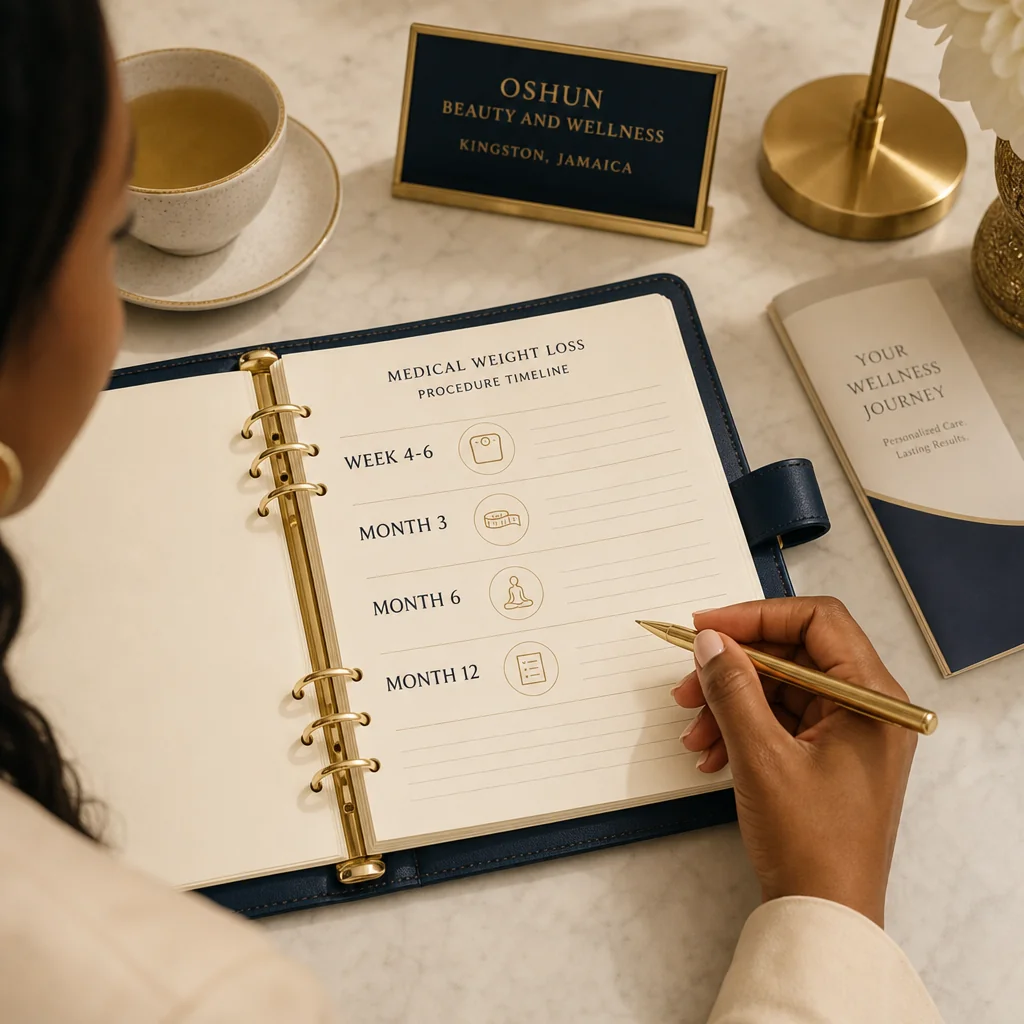
Once you are on the injections you are seen once a month at no additional charge — the monthly consult is free. Each one lasts 15–30 minutes and you are assessed for weight loss, inches lost and fat loss, amongst other things. We typically suggest an initial 3 months on the injections, so you get three free consults.
Are GLP-1 weight loss injections available in Jamaica?
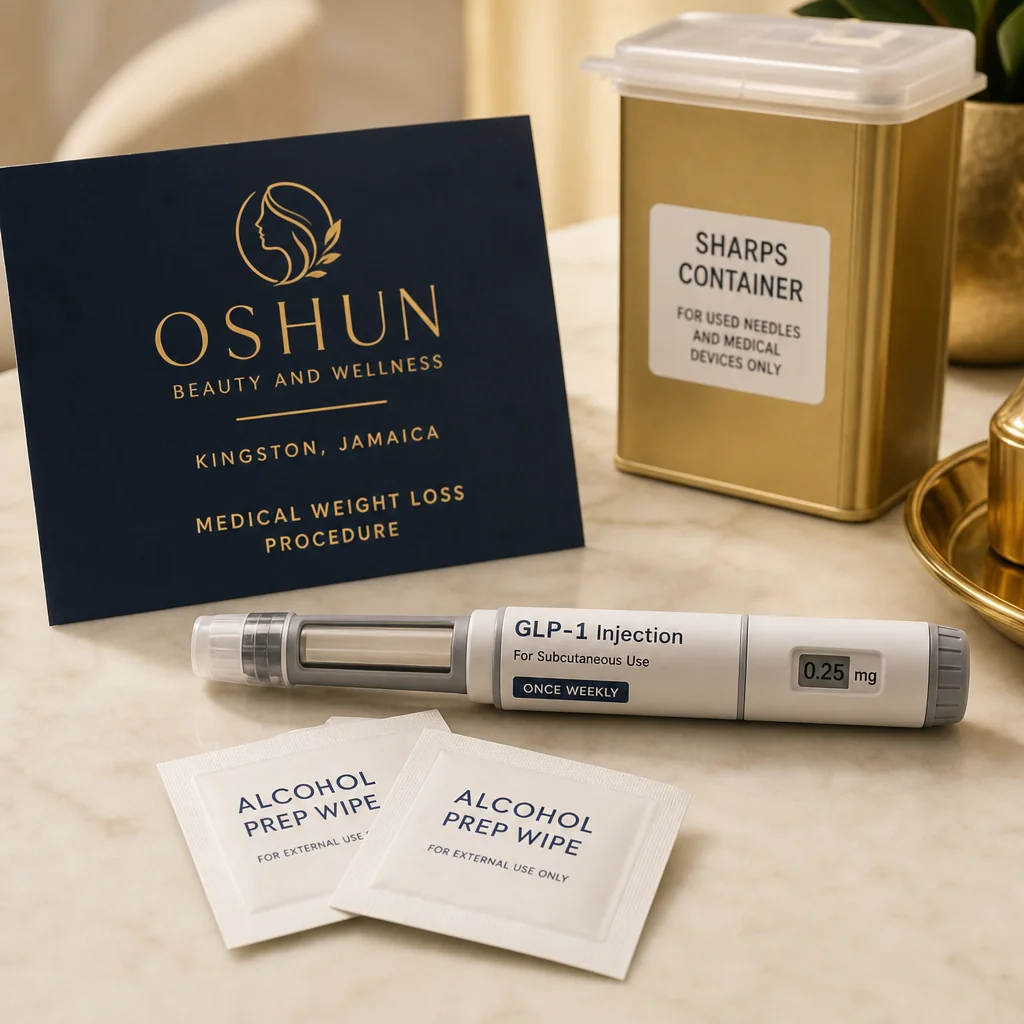
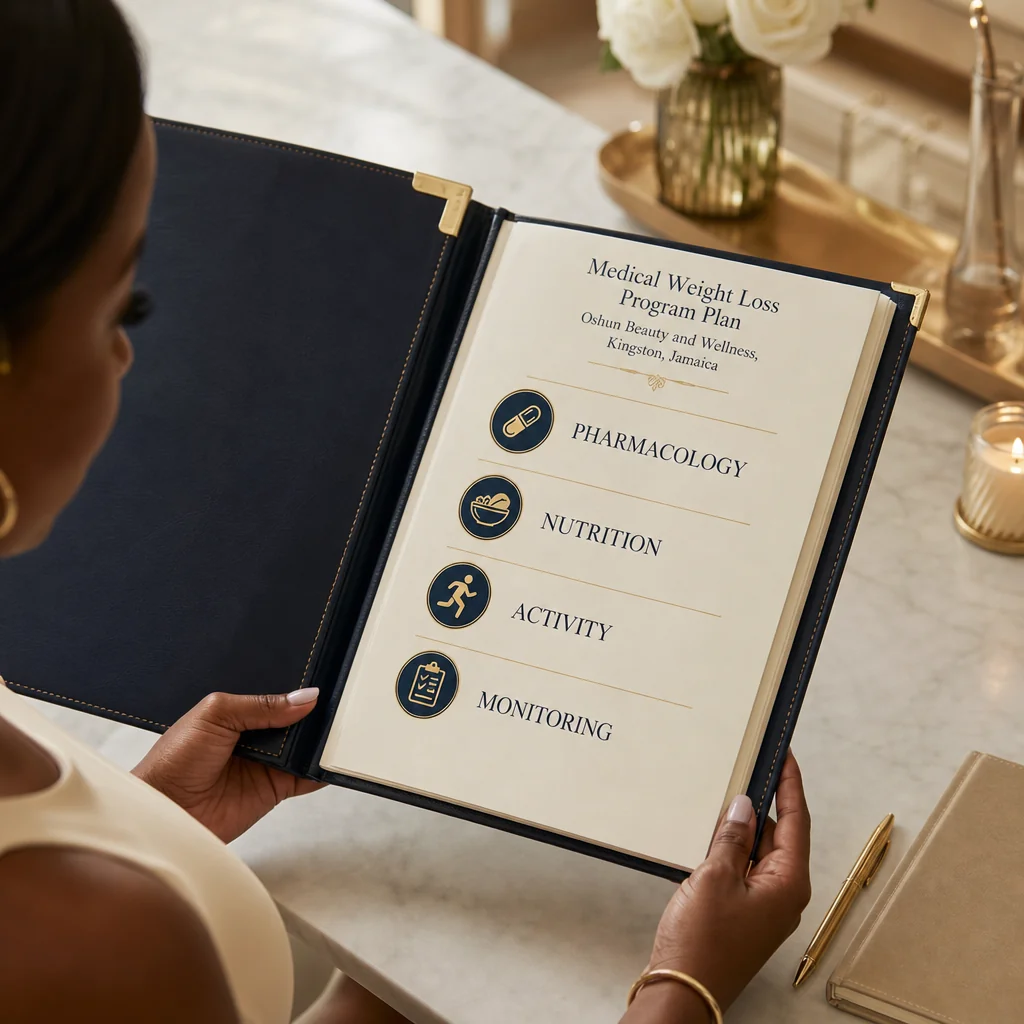
Oshun in Kingston prescribes GLP-1 medicines within the medical weight loss programme led by Dr. Charles Rockhead, after an in-person consultation and baseline laboratory tests. GLP-1 medicines are sometimes hard to source consistently, so ask the care team about supply when you book.
How much does a GLP-1 injection cost in Jamaica?
At Oshun the first consultation starts at J$11,000. The cost of the medication depends on the medicine and dose prescribed, and you receive it in writing at that consultation. The monthly follow-up visit is at no additional charge while you are on the injections.
Do you prescribe Ozempic and Mounjaro?
Yes, where they are appropriate for you.
Ozempic contains semaglutide and
Mounjaro contains tirzepatide; both are weekly injections. Ozempic is licensed for type 2 diabetes, so using it for weight loss is outside its licence. Dr. Rockhead decides with you at consultation which medicine, if any, fits your health and your goals.
Is there a tablet instead of an injection?
Semaglutide also comes as a once-daily tablet called Rybelsus, which the European Medicines Agency lists as a medicine for type 2 diabetes. Ask Dr. Rockhead at consultation whether a tablet is an option for you.
How do I book a medical weight loss consultation?